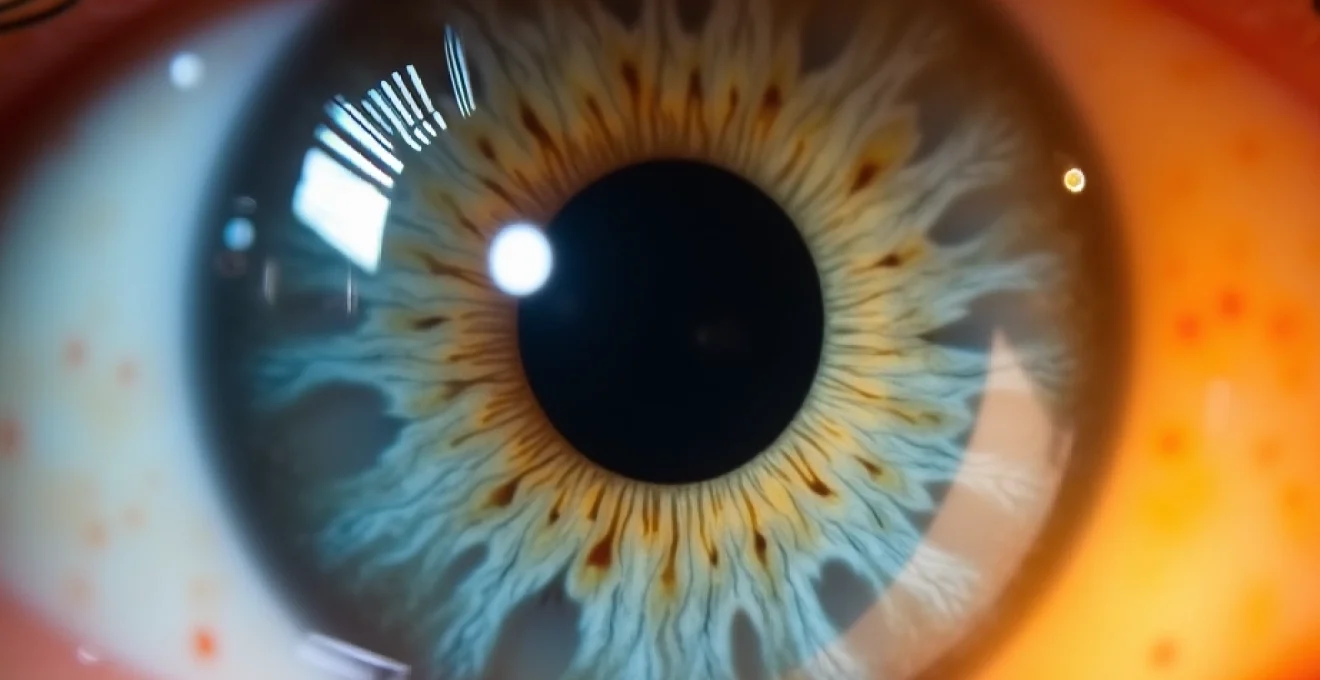
White patches appearing in your field of vision can be both alarming and disorienting, often signalling underlying ocular pathologies that require immediate medical attention. These visual disturbances manifest as bright, pale, or translucent areas that may appear suddenly or develop gradually over time. Understanding the various causes behind these white visual phenomena is crucial for early detection and appropriate treatment of potentially sight-threatening conditions.
The retina, vitreous, and optic nerve work together to process visual information, and disruptions in any of these structures can create distinctive white patches or spots in your vision. From vascular occlusions to inflammatory conditions, the spectrum of disorders causing these symptoms ranges from benign floaters to serious retinal detachments. Recognising the characteristics and associated symptoms of these white patches can help differentiate between urgent medical emergencies and less critical conditions .
Retinal vascular disorders and white visual disturbances
Retinal vascular disorders represent some of the most serious causes of white patches in vision, often requiring emergency intervention to preserve sight. These conditions affect the blood supply to the retina, creating distinctive white or pale areas that correspond to regions of reduced perfusion or tissue damage.
Central retinal artery occlusion and cotton wool spot formation
Central retinal artery occlusion (CRAO) creates one of the most dramatic presentations of white patches in vision, often described as a sudden, painless loss of vision with characteristic fundoscopic findings. The blocked artery leads to retinal ischemia, causing the affected tissue to appear pale or white due to swelling and loss of transparency. Cotton wool spots , which appear as fluffy white patches on the retina, develop when nerve fiber layer infarctions occur due to compromised blood flow.
Patients experiencing CRAO typically report sudden, severe vision loss in one eye, often described as a curtain falling across their visual field. The white patches visible during ophthalmoscopic examination represent areas where retinal tissue has become opaque due to cellular swelling and dysfunction. Time is critical in these cases, as irreversible retinal damage can occur within 90 minutes of onset.
Branch retinal vein occlusion with macular oedema complications
Branch retinal vein occlusion (BRVO) presents with sectoral white patches corresponding to the drainage territory of the affected vein. Unlike arterial occlusions, venous blockages create areas of retinal hemorrhage mixed with white exudates and cotton wool spots. The white patches in vision may appear as flickering or shimmering areas, particularly when macular oedema develops as a complication.
Macular oedema associated with BRVO can cause white patches to appear centrally in the visual field, significantly impacting reading and detailed vision tasks. These white areas represent fluid accumulation and protein deposits that scatter light abnormally. Patients often describe these visual disturbances as resembling looking through frosted glass or seeing white spots that move with eye movement.
Hypertensive retinopathy and hard exudate development
Chronic hypertension causes distinctive white patches in the retina known as hard exudates, which appear as bright white or yellow deposits with well-defined borders. These lipid and protein deposits accumulate when damaged retinal vessels leak plasma constituents into the surrounding tissue. The characteristic “macular star” pattern of hard exudates creates a distinctive white radiating appearance around the fovea.
Patients with hypertensive retinopathy may notice white spots or patches in their peripheral vision initially, progressing toward central vision as the condition worsens. The severity of white patch formation correlates with blood pressure control and duration of hypertension. Flame-shaped hemorrhages often accompany these white exudates, creating a mixed pattern of red and white retinal changes.
Diabetic retinopathy with microaneurysm and haemorrhage patterns
Diabetic retinopathy produces complex patterns of white patches intermixed with hemorrhages and microaneurysms throughout the retina. The white areas represent hard exudates formed by lipid deposits leaking from damaged capillaries, while cotton wool spots indicate areas of nerve fiber layer infarction. These white patches typically appear first in the posterior pole and gradually extend toward the periphery as the disease progresses.
Advanced diabetic retinopathy can create large areas of white fibrovascular proliferation that appear as prominent white patches on the retinal surface. These neovascular complexes may cause sudden white flashes in vision when they contract or bleed. The combination of white exudates, hemorrhages, and new vessel formation creates a characteristic “pizza pie” appearance that diabetic patients may perceive as irregular white and dark patches in their visual field.
Inflammatory ocular conditions causing white lesions
Inflammatory conditions of the eye create distinctive white patches through various mechanisms, including choroidal depigmentation, inflammatory cell accumulation, and tissue infiltration. These disorders often present bilaterally and may have systemic associations that require comprehensive evaluation.
Vogt-koyanagi-harada disease and choroidal depigmentation
Vogt-Koyanagi-Harada (VKH) disease produces extensive white patches in the fundus due to choroidal depigmentation and serous retinal detachment. The inflammatory process targets melanocytes, leading to areas of choroidal whitening that patients may perceive as bright patches in their visual field. The “sunset glow” fundus appearance characteristic of chronic VKH creates diffuse white areas throughout the posterior pole.
Acute VKH disease often presents with multiple serous retinal detachments that appear as elevated white areas on clinical examination. Patients typically report seeing white or bright patches that may fluctuate in size and intensity, often accompanied by photophobia and decreased visual acuity. The bilateral nature of this condition means that white patches usually appear in both eyes, though asymmetrically.
Sympathetic ophthalmia with Dalen-Fuchs nodule formation
Sympathetic ophthalmia, a rare bilateral granulomatous uveitis following penetrating eye injury, creates characteristic white patches known as Dalen-Fuchs nodules. These collections of epithelioid cells appear as small, discrete white spots clustered around the optic disc and posterior pole. The inflammatory response can also cause choroidal depigmentation, creating larger white patches similar to those seen in VKH disease.
The white patches in sympathetic ophthalmia may develop weeks to years after the initial injury, making the diagnosis challenging. Patients often describe seeing multiple small white spots that may appear to move or shimmer, particularly in low-light conditions. The bilateral involvement means that white patches typically appear in both the injured and uninjured eye, though the pattern and timing may vary.
Posterior uveitis and multifocal choroiditis manifestations
Posterior uveitis encompasses various inflammatory conditions that create white patches through different mechanisms. Multifocal choroiditis produces multiple small white spots scattered throughout the posterior pole, while other forms of posterior uveitis may cause more diffuse white areas due to choroidal infiltration or retinal edema. The “punched-out” appearance of chorioretinal scars creates permanent white patches that patients may notice as persistent bright spots in their vision.
Active inflammatory lesions appear as fuzzy white patches with indistinct borders, while healed lesions become well-defined white scars with pigmented borders. Patients with posterior uveitis often report seeing white spots that seem to flicker or change in intensity, particularly during periods of active inflammation. The multifocal nature of many posterior uveitis conditions means that white patches may appear scattered throughout the visual field rather than in a specific pattern.
Birdshot chorioretinopathy and perivascular infiltration
Birdshot chorioretinopathy creates a distinctive pattern of white patches along retinal vessels, resembling birdshot pellets scattered across the fundus. These cream-colored lesions represent areas of choroidal infiltration that appear as oval or round white spots, typically concentrated in the posterior pole. The perivascular distribution of these white patches helps distinguish birdshot from other white dot syndromes.
Patients with birdshot chorioretinopathy may initially notice subtle white spots in their peripheral vision that gradually become more apparent over time. The bilateral and symmetric nature of this condition means that similar patterns of white patches appear in both eyes. Night blindness and photophobia often accompany the visual changes, as the white patches represent areas of reduced retinal sensitivity.
Degenerative macular conditions and white spot syndromes
Age-related macular degeneration and related conditions create distinctive white patches in the central vision through the accumulation of drusen and the development of geographic atrophy. These degenerative changes typically progress slowly, allowing patients to adapt gradually to the appearance of white spots in their vision.
Drusen appear as small, round white or yellow deposits beneath the retinal pigment epithelium, creating a characteristic pattern of white spots clustered around the macula. Hard drusen appear as discrete white dots with well-defined borders , while soft drusen create larger, more diffuse white patches with indistinct edges. Patients may notice these white spots most prominently when looking at uniform backgrounds, such as white walls or blue skies.
Geographic atrophy represents the advanced dry form of macular degeneration, creating well-defined areas of retinal pigment epithelium loss that appear as bright white patches on clinical examination. These areas of atrophy typically start small and gradually enlarge over time, with patients reporting expanding areas of white or bright patches in their central vision. The sharp borders and progressive nature of these white patches help distinguish geographic atrophy from other causes of white spots in vision.
Multiple evanescent white dot syndrome (MEWDS) and acute zonal outer retinal necrosis (AZOOR) represent inflammatory white dot syndromes that can mimic degenerative conditions. These disorders create temporary or permanent white patches in the outer retina, with patients reporting sudden onset of multiple white spots accompanied by photopsia and visual field defects. The acute presentation and association with viral infections help differentiate these conditions from chronic degenerative changes.
Infectious chorioretinal pathologies
Infectious diseases affecting the chorioretinal complex create distinctive patterns of white patches through tissue necrosis, inflammatory cell infiltration, and scarring. These conditions often present with acute visual symptoms and may have systemic implications requiring systemic antimicrobial therapy.
Toxoplasma gondii retinochoroiditis and satellite lesion development
Toxoplasma gondii retinochoroiditis produces characteristic white patches consisting of active retinal necrosis adjacent to old pigmented scars. The active lesions appear as fluffy white areas with indistinct borders, often described as “cottage cheese on tomato sauce” due to the white inflammatory infiltrate overlying choroidal hyperemia. Satellite lesions develop as white patches near existing scars , creating a distinctive pattern that helps confirm the diagnosis.
Patients with active toxoplasma retinochoroiditis typically report seeing a prominent white patch or cloud in their vision, often accompanied by floaters and photophobia. The white areas represent zones of active retinal necrosis and inflammatory cell infiltration. Vitritis often accompanies the retinal lesions, causing the white patches to appear hazy or indistinct. Recurrent episodes may create multiple white scars scattered throughout the fundus.
Cytomegalovirus retinitis in immunocompromised patients
Cytomegalovirus (CMV) retinitis creates extensive areas of retinal necrosis that appear as large white patches with associated hemorrhages. The classic “brush fire” appearance consists of advancing white borders representing active viral replication and tissue destruction. These white patches typically start in the periphery and progress centrally if left untreated, with patients reporting expanding areas of white or bright vision loss.
The white patches in CMV retinitis have a distinctive feathery or brushy appearance at their advancing edge, distinguishing them from other causes of retinal whitening. Patients may describe seeing large white areas that seem to flicker or pulsate, particularly at the borders of active disease. The progression of white patches can be rapid in untreated cases, with doubling of lesion size occurring within weeks.
Acute posterior multifocal placoid pigment epitheliopathy
Acute posterior multifocal placoid pigment epitheliopathy (APMPPE) creates multiple gray-white placoid lesions at the level of the retinal pigment epithelium. These white patches typically appear suddenly and may be accompanied by viral-like symptoms. The placoid appearance and posterior distribution create a characteristic pattern of white patches clustered around the posterior pole.
Patients with APMPPE often report sudden onset of multiple white spots in their central vision, sometimes preceded by flu-like symptoms. The white patches may appear to shimmer or fluctuate in intensity, particularly during the acute phase. Most lesions resolve spontaneously over several weeks, with the white patches gradually fading and leaving behind areas of mild pigmentary disturbance.
Presumed ocular histoplasmosis syndrome characteristics
Presumed ocular histoplasmosis syndrome (POHS) creates a triad of findings including peripapillary atrophy, peripheral “histo spots,” and macular choroidal neovascularization. The peripheral white spots appear as small, discrete chorioretinal scars scattered throughout the fundus. The absence of vitritis distinguishes POHS from other infectious chorioretinitis conditions, with the white patches representing healed inflammatory foci.
Patients with POHS may be asymptomatic until choroidal neovascularization develops in the macula, creating acute white patches associated with subretinal fluid and hemorrhage. The chronic white spots in the periphery typically don’t cause visual symptoms unless they involve the central retina. Vision loss occurs when new white patches develop in the macula due to choroidal neovascular membrane formation.
Neoplastic and Space-Occupying lesions
Tumors affecting the retina and choroid can create white patches through various mechanisms, including tissue infiltration, vascular compromise, and direct mass effect. These lesions may present as solitary white patches or multiple white areas depending on the tumor type and extent of involvement.
Choroidal metastases, particularly from breast and lung carcinomas, often appear as cream-colored or white elevated lesions that patients may perceive as bright patches in their peripheral vision. The white appearance results from the tumor’s reflective properties and associated subretinal fluid accumulation. Multiple bilateral lesions suggest metastatic disease rather than primary ocular tumors, with patients potentially reporting multiple white spots appearing over a relatively short time period.
Retinal astrocytomas create distinctive white patches that may appear as mulberry-like lesions on the retinal surface. These benign tumors often calcify over time, creating increasingly prominent white areas that patients notice as persistent bright spots in their vision. The slow growth of these lesions means that white patches may gradually enlarge over years, allowing patients to adapt to their presence.
Choroidal melanomas can occasionally appear amelanotic, presenting as white or pink elevated lesions rather than the typical dark pigmentation. These white patches may be accompanied by subretinal fluid and secondary changes that create additional white areas in the surrounding retina. The progressive nature of these lesions means that white patches may gradually enlarge and develop associated visual field defects.
The presence of white patches in vision, particularly when associated with flashing lights or sudden onset, requires immediate ophthalmologic evaluation to rule out sight-threatening conditions such as retinal detachment or vascular occlusion.
Optic nerve pathologies and white visual field defects
Optic nerve disorders can create white patches or bright areas in the visual field through various mechanisms, including nerve fiber bundle defects, papilledema, and optic disc anomalies. These conditions often produce characteristic patterns of white patches that correspond to specific nerve fiber distributions.
Optic neuritis creates visual field defects that patients may perceive as white or bright patches, particularly central scotomas that appear as prominent white areas in the center of vision. The inflammatory process affects nerve fiber conduction, creating areas where normal visual processing is disrupted. The Marcus Gunn pupil demonstrates the functional significance of optic nerve damage, with affected areas appearing abnormally bright or white to the patient.
Papilledema, or optic disc swelling due to increased intracranial pressure, creates a characteristic white appearance of the optic nerve head that patients may notice as a bright spot in their visual field. The swelling obscures normal disc details and creates a prominent white elevation that can be accompanied by peripapillary hemorrhages. Visual field defects associated with papilledema may manifest as white patches corresponding to areas of nerve fiber damage, particularly in the inferior nasal quadrant where early defects typically occur.
Optic disc drusen appear as white or yellow crystalline deposits within the optic nerve head, creating a distinctive lumpy white appearance that patients may perceive as a bright spot in their central vision. These calcified deposits become more prominent with age and may cause progressive visual field defects that appear as white patches or bright areas to the patient. The autofluorescence properties of optic disc drusen help distinguish them from true disc swelling, though both conditions can create similar white patch appearances in the visual field.
Anterior ischemic optic neuropathy (AION) creates sectoral nerve fiber bundle defects that patients often describe as white or bright patches in their visual field. The sudden onset of vision loss typically affects either the superior or inferior visual field, with patients reporting that affected areas appear abnormally bright or white compared to normal vision. The altitudinal nature of these defects means that white patches typically appear as horizontal bands across the visual field rather than scattered spots.
Compressive optic neuropathy from tumors or aneurysms can create progressive white patches in the visual field as nerve fibers become damaged. These defects often start peripherally and progress centrally, with patients reporting gradually enlarging white areas that may eventually involve central vision. The specific pattern of white patch development depends on which nerve fiber bundles are affected by the compressive lesion, creating characteristic visual field patterns that help localize the site of compression.